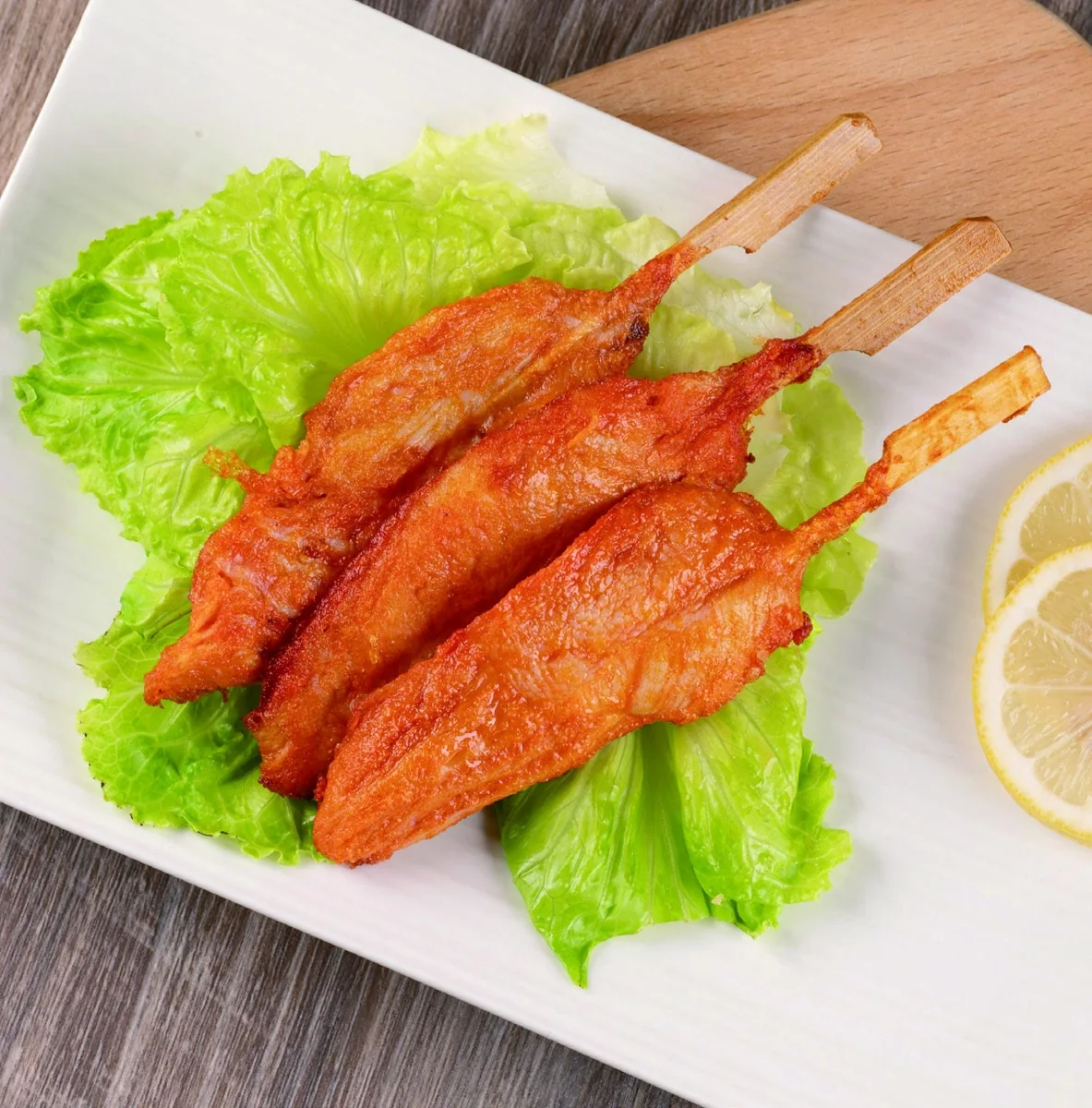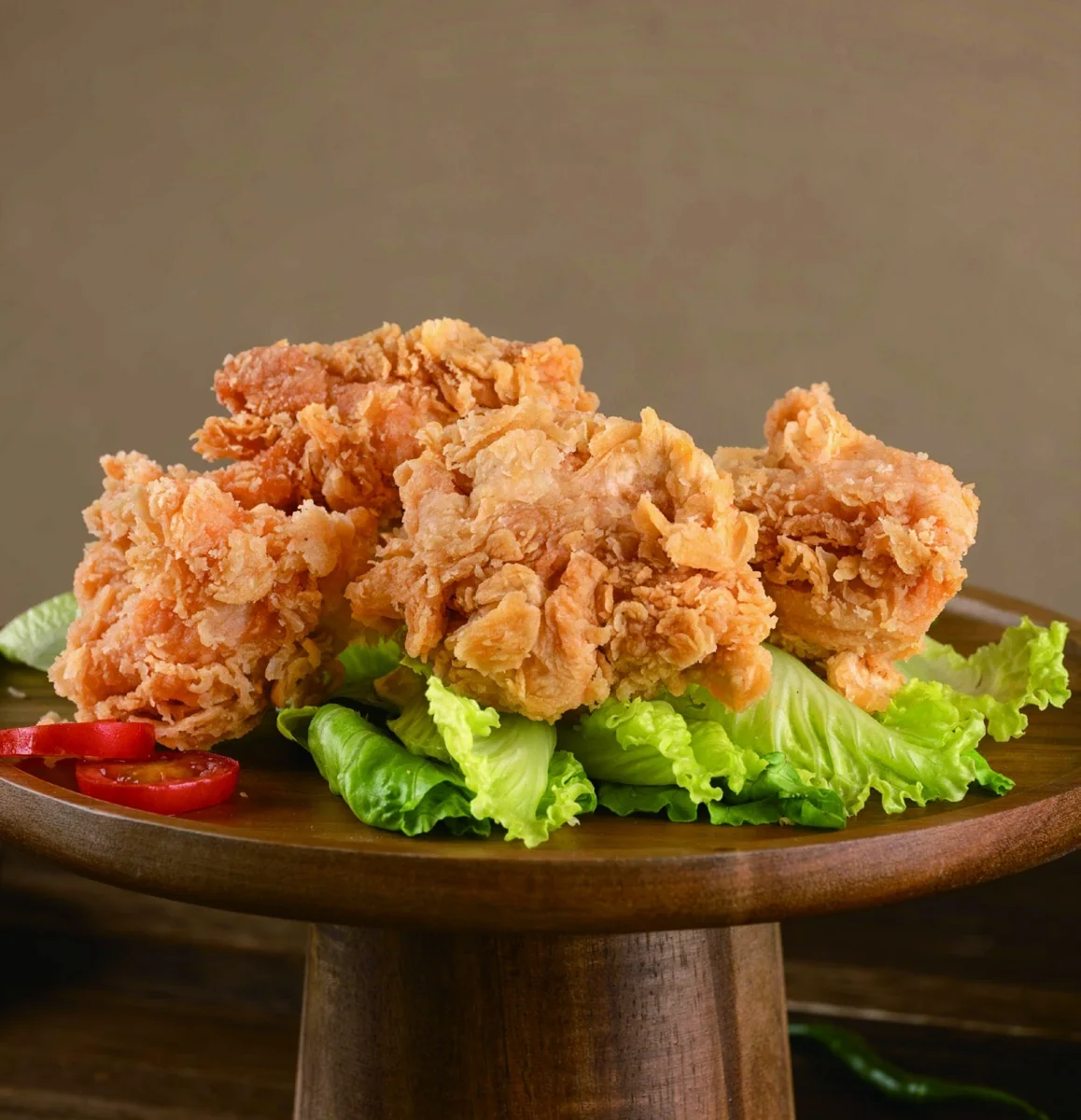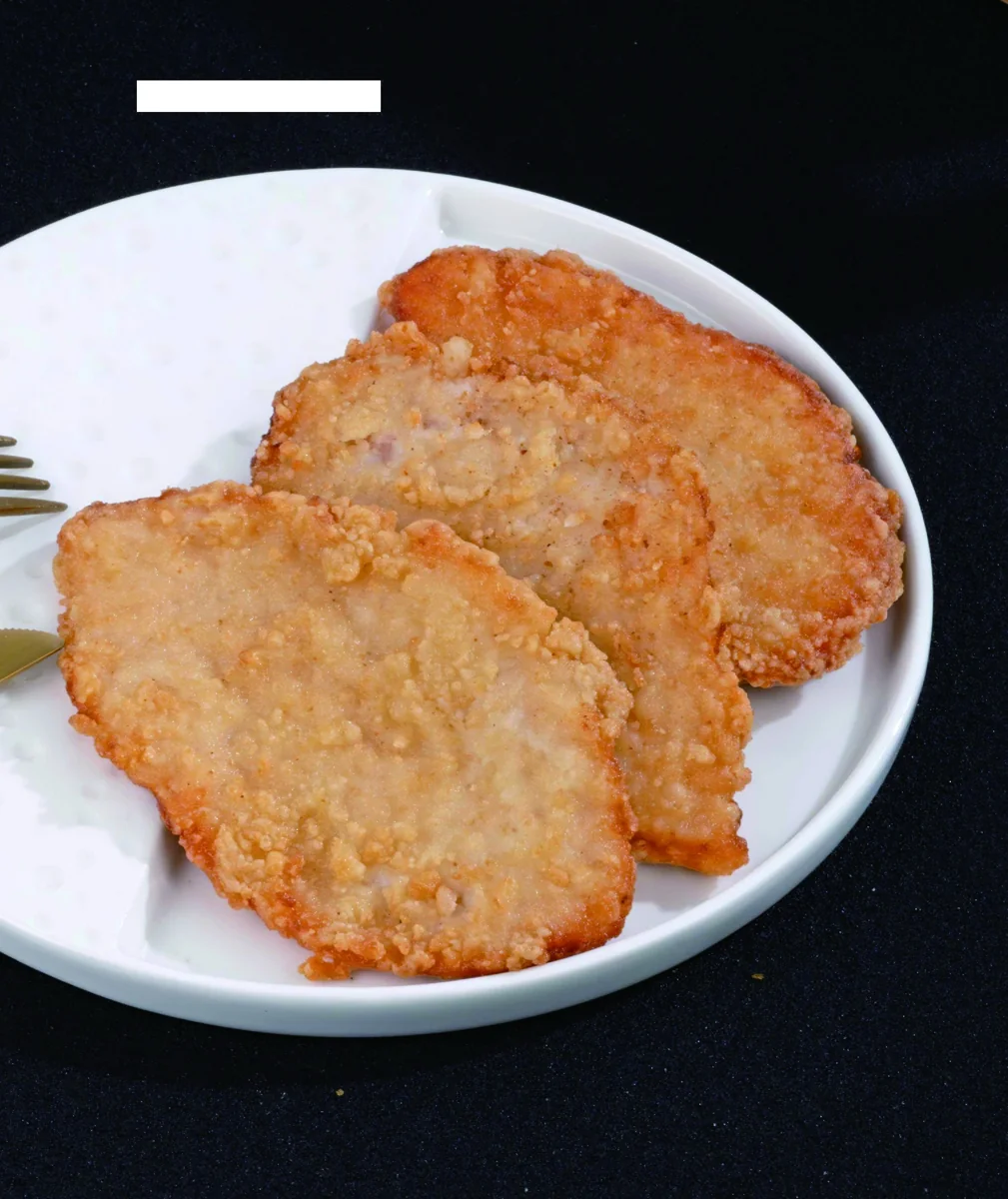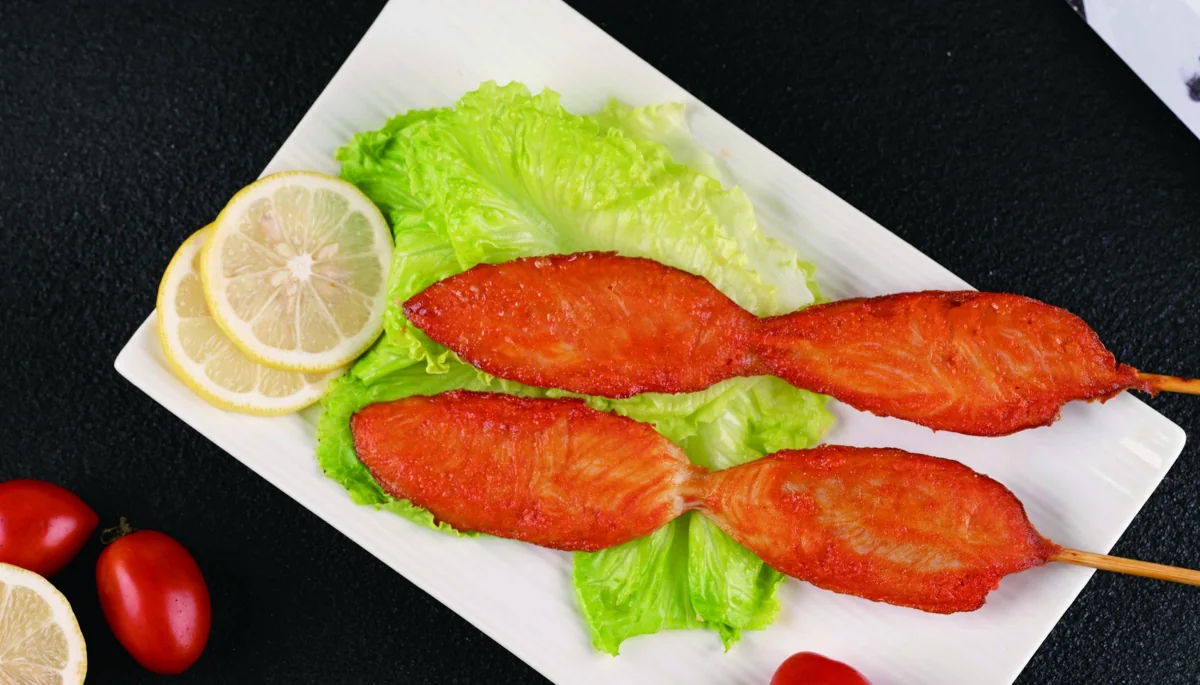
Separate breast, thigh, tenderloin and formed construction
Write the required cut explicitly: breast, thigh, tenderloin or another agreed meat specification. A tenderloin has a specific anatomical meaning in the Canadian Food Inspection Agency's wholesale nomenclature. A general product name containing 'tenders' does not by itself confirm that a particular supplier uses intact tenderloin.
Ask whether the strip is cut from an intact muscle, formed or produced by another declared method. Define bone, skin, tendon and trimming requirements. Request the relevant composition and ingredient information so that the specification, accepted sample and proposed product description refer to the same item.
Measure the size distribution, not only an average weight
Specify length, width and thickness ranges alongside individual supplied-piece weight. State whether measurements describe the meat portion or the complete supplied product, including any marinade or coating. Confirm the measurement stage and treatment of free liquid. Record the proportion of pieces allowed outside the agreed limits rather than treating a nominal average as a guarantee.
During the sample check, select pieces using an agreed method across the chosen packs. Measure individual pieces and record short ends, small fragments and joined pieces separately. For wraps, test the usable length and distribution along the filling. For a bowl, assess coverage at the target serving weight. An attractive whole-strip photograph cannot answer either question.
Compare marinated and coated formats on separate criteria
State whether your project requires a marinated, breaded, battered or otherwise specified format. The two TPJ strip and tender references are listed in the marinated category; a coated alternative requires a separate feasibility discussion. Do not assume that either catalogue name confirms breading or a fixed recipe.
Describe the required flavour using a reference sample and agreed sensory terms. Review ingredient restrictions and allergens for the exact formulation. For a coated candidate, add crumb or batter style, loose coating and adhesion to the trial record. For a marinated candidate, record surface seasoning and free marinade separately.
Confirm raw, partially cooked or fully cooked supply state in writing. Health Canada explains that some frozen breaded strips can look browned while still being raw. Obtain instructions for the selected item and intended equipment; catalogue appearance does not establish ready-to-eat status.
Connect bag net weight to acceptable finished portions
Confirm bag net weight, bags per case and case net weight separately from gross shipping weight. Ask how pieces separate under normal handling; do not assume individually quick-frozen presentation. Review storage conditions, shelf life and pack instructions for this specific product.
For portion planning, divide the measured accepted finished chicken mass by the agreed chicken mass per serving, rounding down to complete servings. Use actual trial weights after the defined preparation and acceptance checks, not the nominal frozen bag weight. Record leftovers, rejects and trimming separately. This produces a trial-based serving estimate, not a promised production yield.
Compare case cost per acceptable serving only after aligning the product, pack and quotation basis. A lower price per kilogram can represent a different cut, size distribution or supplied-weight basis.
Send a strip-specific brief for technical review
Share the fields below with Charles Tao and the TPJ PROTEIN team. Mark undecided requirements for review rather than inserting industry averages. Sample availability, product feasibility, commercial terms and the supplying establishment's eligibility for your destination are confirmed for the selected enquiry.
FROM READING TO AN RFQ
Your buyer checklist
Bring these details into your enquiry so the team can review a focused brief.
- Catalogue reference and intended dish: [enter].
- Required meat cut, construction, bone, skin and trimming limits: [enter / confirm].
- Strip length, width, thickness and supplied-piece weight ranges: [enter].
- Measurement basis and permitted size variation or fragments: [agree].
- Marinated, coated or other required format, flavour and ingredient restrictions: [enter].
- Supplied cooking state and preparation equipment: [confirm].
- Finished serving mass, sauce arrangement and menu-trial acceptance criteria: [enter].
- Bag net weight, bags per case and piece-separation requirements: [enter].
- Destination country, port, importer and documents to review: [enter].
- Expected volume, shipment timing and quotation basis: [enter].