Start with a wing cut, not just an Orleans flavour
A quotation for wholesale Orleans-style chicken wings needs two descriptions: the cut being purchased and the seasoned product being supplied. A whole wing, a mid-wing and a wing drumette are different counting units. Comparing their price or piece count without identifying the cut can misstate the number of menu portions a case will deliver.
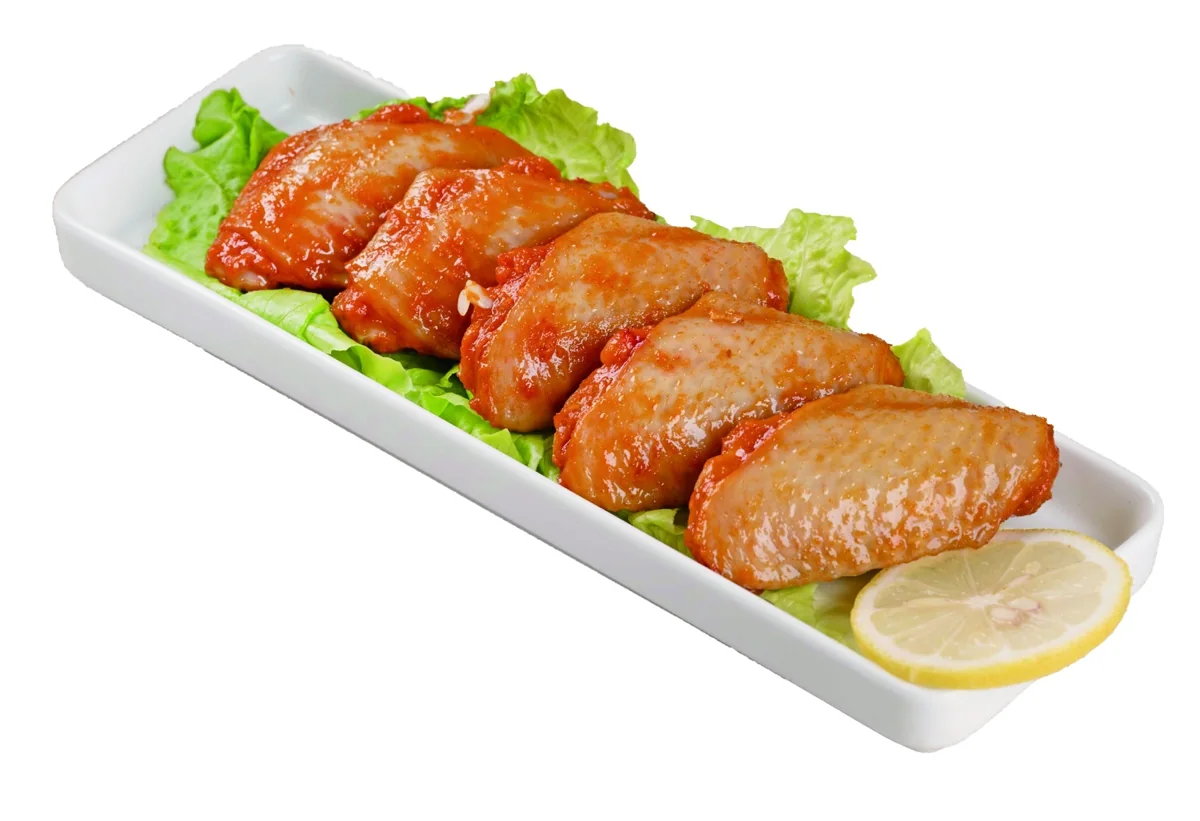
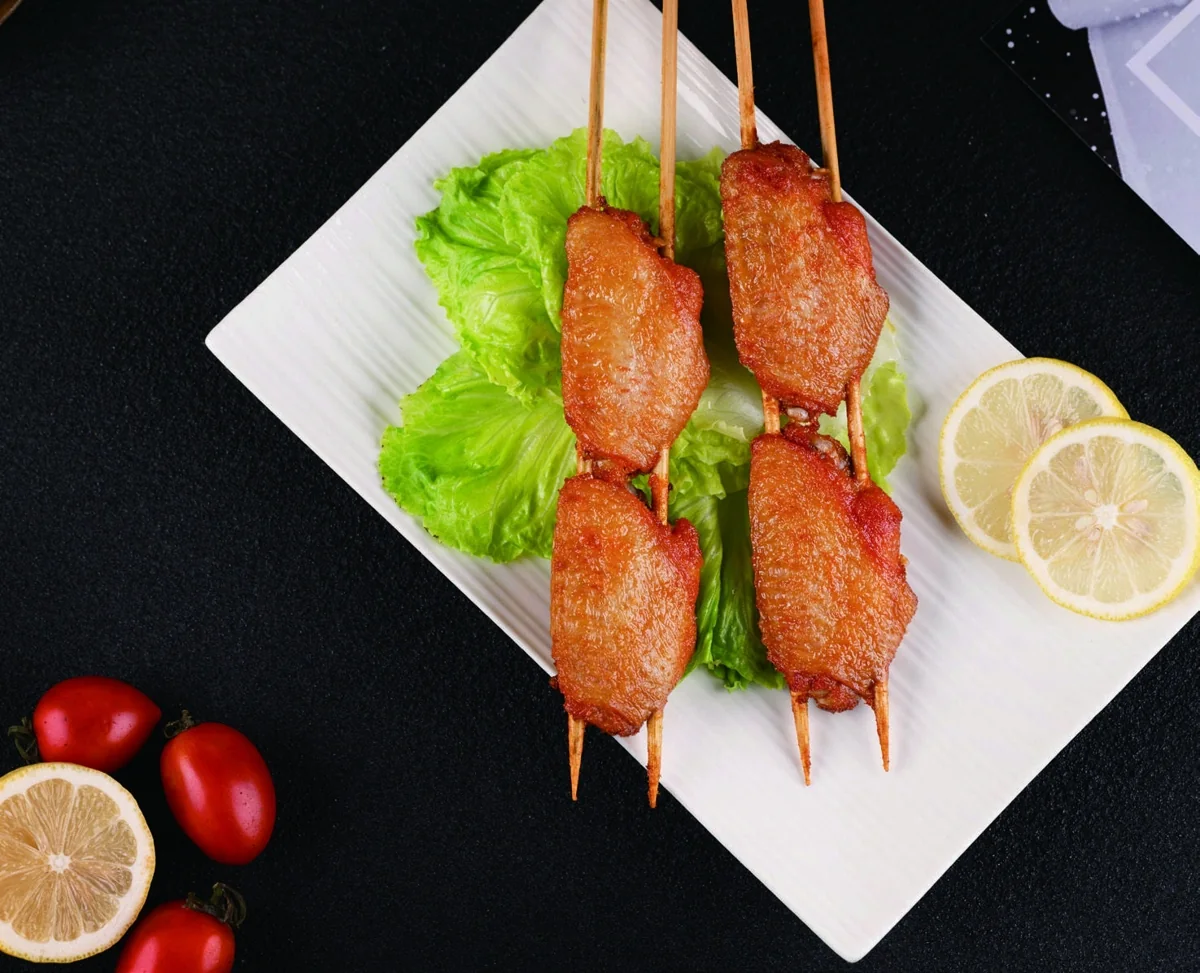
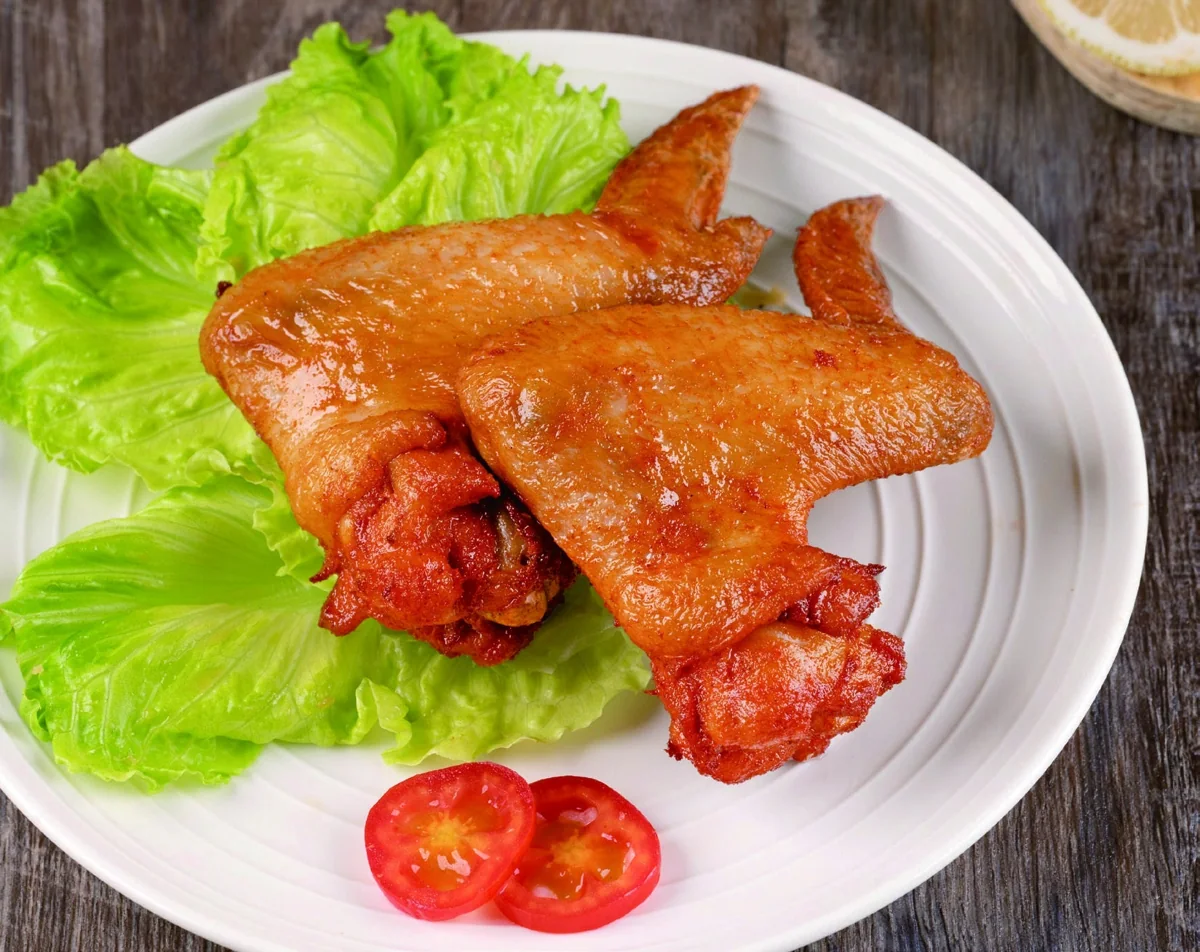
TPJ Food Group lists Orleans Chicken Mid-Wings, Orleans-Style Chicken Wing Drumettes, Mid-Wing Skewers and Orleans Grilled Chicken Wings. These catalogue names do not establish a universal size grade, recipe or cooking state. Use the selected reference when requesting its current specification.
Distinguish mid-wings, wing roots and whole wings
USDA AMS identifies the wing drumette as the first segment and the wing flat as the second. In this buying brief, mid-wing means the flat, while wing root means the drumette. Confirm the supplier’s terminology with a labelled cut photograph, particularly when translating a bilingual specification.
| Requested format | Specify in the enquiry | Counting question |
|---|---|---|
| Mid-wing / flat | Second wing segment; trimming, skin and bone requirements. | Does one separated flat count as one piece? |
| Wing root / drumette | First wing segment, distinct from a leg drumstick. | Does one drumette count as one piece? |
| Whole wing | Connected wing format; explicitly confirm tip-on or tip-off. | Is each connected wing counted once? |
| Mixed wing joints | Included cuts and required drumette-to-flat ratio. | Is the mix controlled by number or by weight? |
| Mid-wing skewer | Wing pieces per skewer and skewer dimensions. | Are quoted counts wings, skewers or finished portions? |
Calculate pieces per kilogram from a weighed sample
Agree the sampling basis before counting. Record the product code, lot, packs selected and supplied condition. Tare the weighing container, count intact pieces and weigh that same selection. Document how loose ice, free marinade and damaged pieces are handled under the agreed method. Do not select only similarly sized pieces.
Estimated pieces per kilogram = counted pieces × 1,000 ÷ sample product weight in grams.
For illustration only, 30 pieces weighing 960g give an estimated 31.25 pieces per kilogram and an average piece weight of 32g. These are example calculations, not a TPJ product grade. Repeat across the agreed packs and report the observed range; one sample estimate does not become a guaranteed count.
A whole wing counted once cannot be compared directly with one separated joint counted once. Keep cuts separate in the worksheet. Pieces per kilogram also does not measure edible-meat yield: the measured product may include bone, skin and marinade according to its specification.
Describe size and physical condition beyond an average
Record the requested piece-weight interval and the permitted proportion outside it, with a sampling plan the supplier can confirm. Ask whether grading is performed before or after marination and freezing. A grade for an unseasoned cut should not automatically become the finished seasoned-product grade.
Define the relevant bone, skin and trimming requirements. Agree how joint damage, broken pieces, feather remnants, exposed flesh and unwanted attached material will be assessed. Use annotated sample photographs to distinguish acceptable appearance from rejects, and connect those photographs to the written specification version.
Confirm marinade and cooking state separately
Describe the desired sweetness, heat, saltiness, aroma and surface appearance through a reference sample or agreed sensory brief. Request ingredients, allergens and any declared added solution. Ask what the quoted supplied weight includes and how the recipe is controlled; Orleans-style is not a fixed ingredient declaration.
For Orleans Grilled Chicken Wings, confirm whether the offered product is raw, partly cooked or fully cooked and obtain the applicable preparation instructions. The catalogue name does not establish ready-to-eat status. USDA FSIS explains that poultry colour is not a reliable substitute for checking cooking safety; appearance alone cannot resolve the supplied-state question.
Compare wing samples as complete menu portions
Keep each sample’s identity and preparation record. Follow the instructions for that particular product, noting equipment, starting condition, load and process. Test the intended serving container and the actual sauce arrangement. Record immediate results and results after the intended service interval under the buyer’s approved handling procedure.
| Trial check | Record | Why it helps the purchase decision |
|---|---|---|
| Cut and size | Cut mix, individual weights and sample count calculation. | Exposes a different counting unit or size distribution. |
| Supplied condition | Intact pieces, loose material and agreed rejects. | Separates usable wing portions from material needing review. |
| Finished portion | Piece count, finished serving weight and presentation. | Tests the meal the customer will actually receive. |
| Eating quality | Skin texture, meat texture, seasoning and sauce performance. | Makes preference comparisons specific and repeatable. |
| Service performance | Portioning time, holding conditions and breakage. | Shows whether the candidate fits the kitchen’s workflow. |
Match the count basis to the final pack and quote
Request inner-pack net weight, packs per carton and carton net weight separately from gross shipping weight. State whether portions must separate easily or whether another frozen presentation is acceptable. Obtain storage and shelf-life details for the selected item instead of copying them from a different chicken product.
If an offer gives an approximate count, ask whether it is descriptive or a contractual commitment. Agree the assessment method before relying on it for a fixed-count menu. Compare case cost against acceptable servings from the recorded trial, using the same finished serving target for each candidate.
Send Charles Tao and the TPJ Food Group team the following wing-specific brief. Unconfirmed fields can remain open for supplier review; the final quotation should identify the agreed product and specification.
FROM READING TO AN RFQ
Your buyer checklist
Bring these details into your enquiry so the team can review a focused brief.
- Catalogue reference: mid-wings / wing drumettes / grilled wings / mid-wing skewers.
- Exact cut, tip status, bone and skin requirements: [enter].
- Mixed-joint ratio and control by count or weight, if applicable: [enter].
- Target piece-weight grade, tolerance and grading stage: [enter].
- Count unit and pieces-per-kilogram sampling basis: [agree].
- Marinade brief, ingredient and allergen requirements: [enter].
- Supplied cooking state, preparation equipment and instructions: [confirm].
- Inner-pack net weight, packs per carton and carton net weight: [enter].
- Sample acceptance limits and finished menu portion: [enter].
- Destination, volume, timing and quotation basis: [enter].